LoCos, Leaders, and Lessons Learned: Ohio Team October 10, 2013 No Comments
In the latest LoCo Team interview in this US Teams Interview Series, Elizabeth Krumbach Joseph talks with Stephen Michael Kellat, LoCo Contact for Ubuntu Ohio.

US-Teams: Could you tell us a little about you and what your role in the LoCo Team is?
Stephen Michael Kellat:I remain the ARM enthusiast in Ubuntu Ohio. Beyond presenting our weekly podcast, Burning Circle, I serve as Point of Contact/Leader.
US-Teams: We understand the team used to be governed by a three-person council, can you share a bit about what it was like to switch to a single leader?
Stephen Michael Kellat: Technically the council still exists with only one member: me. This is much like in the United Kingdom with one of the Secretaries of State having the subordinate title of “President of the Board of Trade” even though the Board ceased to meet long ago. For the time being I act as a sort of conservator as the council is understaffed.
During the conference, they talk about processing the legality of virtual recreation, such as betting at Daisy Slots and many more. Once we have ten active Ubuntu Member persons in the community I will call for an election to re-staff the High Council. I have been pushing to increase the number of folks on the path to becoming Ubuntu Members. This is a slow thing that is going to take a while. Once we have enough Ubuntu Member persons to serve as kernels for activity around the Buckeye State we’ll be able to move forward.
US-Teams: What kinds of projects are you currently engaged in?
Stephen Michael Kellat: Currently we have a weekly podcast produced, Burning Circle. There is an initiative to shepherd and encourage members through the process of securing Ubuntu Member status. We are looking at re-establishing sub-state localized groups but that needs more work currently.
US-Teams: Please tell us about some of your recent events.
Stephen Michael Kellat: Our big push since I took over as Leader was Ohio Linux Fest. The 2013 event took a lot of time to prepare for. We put on a major show with UbuCon with presentations from Jon Buckley of our community as well as from folks attached to Project: Community Computing, System76, and Canonical. With members currently as spread out as they are we have a difficult time gathering together physically. We have not had any new online educational activities in the IRC channel but I hope to get at least one more scheduled and done before the end of 2013.

US-Teams: What are some of the challenges the Ohio team has encountered and how have you overcome them?
Stephen Michael Kellat: Last minute shortfalls on the part of Ohio Linux Fest almost resulted in our presence being curtailed. Support from an Ubuntu Member in our community, James Gifford of AskUbuntu fame, that was later reimbursed out of the Community budget administered by Jono Bacon’s team helped ensure we could represent Ubuntu and its many flavors in the state capital.
US-Teams: What tools have you found most effective for your team?
Stephen Michael Kellat: Our mailing list and the IRC channel remain the most effective means of communication for our community. Our forum presence is not in good shape and we are working to transition such to Ubuntu Discourse as part of a test. Ubuntu Discourse has a lower friction level for use plus an automatic newsletter function which may work better in the long run.
US-Teams: Do you have any advice for other teams?
Stephen Michael Kellat: The LoCo Council equips, advises, and mentors. That Council does not do the heavy lifting of making communities work. That is up to the leaders of those communities themselves. When I was acting as emcee during UbuCon at Ohio Linux Fest I was not worried about what the LoCo Council would or would not do but knew that responsibility for a good show stopped with me as direct organizer.
Do not be afraid to reach out on loco-contacts laterally for support from colleagues and compatriots in other communities. The mailing list is pretty quiet. If you ask for help, people may yet answer. For example I sent off a copy of a python script for checking Code of Conduct signing status to a community leader in Europe who asked so they could see who had signed. I also sent our Ubuntu Member check script too. Support and efforts do not have to be top-down affairs.
LoCos, Leaders, and Lessons Learned: Pennsylvania Team September 24, 2012 No Comments

In the latest LoCo Team interview in this US Teams Interview Series, Benjamin Kerensa talks with Jim Fisher LoCo Contact for Ubuntu Pennsylvania.

US-Teams: Could you tell us a little about you and what your role in the LoCo Team is?
Jim Fisher: When our founder stepped down, and after being inspired by Elizabeth
Krumbach’s Fosscon Keynote address, I volunteered to be PA Team
Leader.
I look at the role as Team Contact, more than leader, and try to get
our various areas within the state to act autonomously with their
local communities.
http://jedijf.blogspot.com/2011/10/geek-of-week.html
US-Teams: When was Ubuntu Pennsylvania founded? How long did it take to get approved?
Jim Fisher: Founded: March 2007
First Approval: June 2007
Re-Approval: September 2011
https://launchpad.net/~pennsylvania
https://wiki.ubuntu.com/PennsylvaniaTeam/ApprovalApplication
https://wiki.ubuntu.com/PennsylvaniaTeam/ReapprovalApplication
US-Teams: What tools do you use for your team? Mailing Lists, Forums, IRC, websites, Micro-blogging sites etc.
Jim Fisher: Via our website at http://ubuntupennsylvania.org/ we use everything.
US-Teams: What are the biggest challenges your team faces now and what strategies does the team use to over come them?
Jim Fisher: PA is a large state, so we split the state into ‘Regions’ to better
serve all parts of the state.
The Philadelphia Area is the largest, and has always been more active
than the other areas.
We hope that by doing things in the Philadelphia Area, the other areas
will be inspired to do the same.
The biggest challenge is finding people willing to do things. It’s
really not that hard, but unfortunately, no one steps up and does it.
US-Teams: What types of activities does the LoCo Team participate in? Are there any events the LoCo team sponsors?
Jim Fisher: We do Release Parties, Installfests, and Bug Jams.
We sponsor Fosscon, CPOSC, and Software Freedom Day.
Through the years we have done many things.
https://wiki.ubuntu.com/PennsylvaniaTeam/EventsTeam
US-Teams: What are some of the projects your LoCo team has worked on? What are some of the upcoming projects the Ubuntu community can expect to see from the LoCo team throughout the next cycle?
Jim Fisher: For the future, we will continue with our ‘Main Events’: Fosscon,
Software Freedom Day, CPOSC, and Release Parties.
Hopefully, with enough interest, restart NTR Training and refurbishing
of old equipment.
https://wiki.ubuntu.com/PennsylvaniaTeam/CommunityOutreachTeam/NtrTraining
https://wiki.ubuntu.com/PennsylvaniaTeam/CommunityOutreachTeam/NtrLaptopProject
US-Teams: What are some of the ways in which the LoCo actively recruits new members? What resources have you created or do you use (ie posters, fliers, business cards, banners etc)
Jim Fisher: At events we bring our banner and business cards.
Posters and fliers have been effective.
More recently, we have used reddit.
US-Teams: What has been the most rewarding and exciting moment for the LoCo Team to date and why?
Jim Fisher: All events. It’s amazing, but whenever we get together in real life; it’s magic.
US-Teams: What suggestions would you offer for newly formed LoCo teams or those teams working toward approval right now?
Jim Fisher: Nike. Just do it. Don’t listen to naysayers.
US-Teams: What tips, tricks, tools, references etc would you suggest for the leadership of a LoCo team?
Jim Fisher: The resources are out there. Bugjam – POW. The community docs
have everything you need. Start small. Ubuntu Hour. Just do it. Then when you see how easy it is
you can move on to bigger events.
Give people roles to make them feel a apart of the LoCo and to split
up the work to prevent burnout.
US-Teams: When you think of the Ubuntu Community and the spirit of Ubuntu how does the LoCo embody and share that spirit?
Jim Fisher: The greatest part of the LoCo are the newcomers. Being accepting and
welcoming to the newcomers is the Spirit that LoCo’s provide. We all
have to start somewhere.
US-Teams: Is there anything else about the LoCo team, or suggestions for being an effective and successful LoCo team you would like to share that you haven’t already?
Jim Fisher: Nike. Just do it.
Ubuntu Oregon: Progress Can Be Made September 26, 2011 No Comments
Article contributed by Benjamin Kerensa
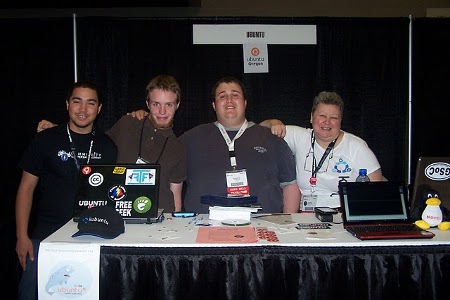
I have been contributing to Ubuntu for nearly 18 months mostly on IRC, Forums and also by working with a local non-profit that distributes Ubuntu computers. For the longest time I didn’t really consider whether Ubuntu had any local events then one day I got curious and stumbled upon the LoCo Wiki for Oregon.
I was notably disappointed to find out that my LoCo had essentially went dormant and I sent quite a few e-mails out and honestly their was no leadership to be found. In July I happened to be attending OSCON when the current listed Team Lead reached out and told me he needed someone to run the Ubuntu Booth so I volunteered. That weekend I was also attending Community Leadership Summit where I got to meet the person who was the interim Team Lead and who ended up asking me to take over things.
I will say the booth at OSCON was not what I would consider to be ideal although we pulled things together with the resources we had and luckily Ubuntu Washington’s LoCo also was there to help.
Once I took the new role as Team Lead my immediate goal was to begin getting the Ubuntu Oregon active again and I knew it wouldn’t be a easy task by any means. Over the last few months our IRC channel has grown from 3-4 concurrent users to 26+ with quite a decent amount of chatter and we are more active then ever and still working to become more active.
I’m sure there are other LoCos that have went dormant for one reason or another and I want to encourage Ubuntu Users to take the initiative to try and kick start their LoCo because in my example the results were excellent and have started to pull other LoCo members out of the woodworks who had give up hope on a active LoCo Team.
So if your LoCo Team is in a similar state don’t fret just be motivated and persistent and remember that your efforts are a contribution to the Ubuntu Community at large and locally.
If any LoCo ever needs any advice, feedback or has questions feel free to ping my nick (bkerensa) on IRC.
Feeling lonely? Finding what other LoCos are up to May 24, 2011 No Comments
Article contributed by Elizabeth Krumbach
It can sometimes feel a bit lonely running a LoCo in your small area of the country. What resources are available for finding out what other LoCos are up to? Where do these folks swap trade secrets and share successes?
Here’s a quick rundown of a few resources you can use and visit to learn more and be inspired by the work of other LoCo teams:
- loco-contacts mailing list – no, you don’t need to be the contact for your team to join!
- Chat at #ubuntu-locoteams on irc.freenode.net (click here to access via your web browser)
- LoCo Directory: indexes events of teams all over the world! Using it for your team yet?
- Planet Ubuntu, while not strictly about LoCo teams there are often posts about events and parties held by teams so it’s frequently worth a browse
- Ubuntu Team Reports are monthly reports from teams all over Ubuntu so they can share their progress with the rest of the community. LoCo teams have been asked to participate so you’ll find news from several teams around the world aggregated here. Not doing team reports for your team yet? That page also links to details on getting started.
The Best Wiki Pages You Didn’t Know About: LoCo Computer Fair Howto January 2, 2011 No Comments
Article contributed by Elizabeth Krumbach
When it comes to wiki pages for LoCo team there is a lot of great information out there but finding it can even be a challenge for seasoned LoCo leaders. This continues our series of articles highlighting some of the “Best Wiki Pages You Didn’t Know About” which seeks to highlight some of these pages and encourage expansion.
A lot of LoCo teams have booths at conferences (see the ConferenceApperances wiki page). Canonical will send out a limited number of Conference Packs to teams which request them, and there is a ConferenceTopTips wiki page which offers some general suggestions for running a booth and engaging visitors.
However, what I needed was a good page detailing the great ideas of LoCo teams around the world for what they do at and bring to booths. To my delight this page already existed!
This wiki page not only goes into extensive detail about what you can DO at your booth, but it provides a table of common things to collect for your team’s “booth box” and takes you through the steps of what you should do in the weeks before the event, an hour prior to the event and after the event. It also has photos of some of the booths that other teams have put together for inspiration.
So next time your team is planning a booth, be sure to check out this page, and come back to it to add your tips when you come up with great ideas!
Also check out our last “Best Wiki Pages You Didn’t Know About” article:
LoCos, Leaders, and Lessons Learned: Michigan Team August 18, 2010 1 Comment
Article contributed by Amber Graner

In the latest LoCo Team interview in this US Teams Interview Series – LoCos, Leaders, and Lessons Learned, Amber Graner talks to Greg Grossmeier of the Ubuntu Michigan LoCo Team. Greg talks about the history of the team, resources, events, a new podcast put together but Ubuntu Michigan team members and more!
US-Teams: Could you tell us a little about you and what your role in the LoCo Team is?
Greg Grossmeier: Well yes! My name is Greg Grossmeier and during the day I work as the Copyright Specialist at the University of Michigan Library where I work with such great projects as Open.Michigan and the Scholarly Publishing Office. I’m also a Fellow at Creative Commons (where I interned when in grad school). But most importantly (for this conversation) I am the (by name only) leader of the Michigan LoCo Team. I can’t really say I’m the leader of the team without qualifying it because without the tremendous help of many people in the LoCo there would be nothing to lead.
US: When was the Ubuntu Michigan LoCo team started? How long after it was started did it take to get approved?
GG: The Launchpad team for the Michigan LoCo was created in June of 2007. That was the summer before I went to grad school and I thought “Hey, I know what would be a great compliment to starting a graduate school program, starting an Ubuntu LoCo team!” To my surprise, and everyone else’s, it actually worked!
However, this team didn’t start from scratch in June of 2007. I unknowingly started a team that had already tried to start before. The awesome Jorge Castro (and others) had started a LoCo for the area a while before, but it was laying dormant when I came into the picture. In fact, I “started” the LoCo before I had even moved to Michigan. While still in Minneapolis, MN I created the IRC channel, wiki page, mailing list, and Launchpad team; setting up the technical infrastructure from afar.
But with Jorge (and others’) help, we got more interest in the team, met a few times, and the Michigan LoCo was back in business.
US: What tools do you use for your team? Mailing Lists, Forums, IRC, websites, Micro-blogging sites etc.
GG: We use mostly the IRC channel (#ubuntu-us-mi) and the mailing list (ubuntu-us-mi@lists.ubuntu.com). There was some initial interest with the Forum but that has slowly died down (except for people asking about the IRC channel). We also have an identi.ca group that (sadly) doesn’t get used for much except spam accounts joining it.
US: On the road to LoCo approval what were some of the challenges the team faced and how did the team overcome them?
GG: Mostly, the challenges we faced was focusing our energies on specific attainable goals like bug/packaging jams. There was also the issue that South East Michigan area (where many of the team members live) has no lack of techie groups to join and there are many LUGs and other User Groups to consider. So one of the things we needed to do right away was convince people that A) we weren’t trying to steal members from other groups and B) our group added something special and different to what was already available.
US: What are the biggest challenges your team faces now and what strategies does the team use to over come them?
GG: The biggest current challenge is probably the momentum problem. We have been fairly lax lately with our event planning. We have participated in the major events like the Ubuntu Global Jam and of course the release parties, but getting together more often is definitely one of our major goals. One strategy that worked recently was for one of our members to get married (congratulations Jorge and Jill!); that brought much of the LoCo team out and having fun along with (gasp!) dancing.
US: What types of activities does the LoCo Team participate in? Are there any events the LoCo team sponsors?
GG: Along with release parties and the Global Jam, the team also makes sure to have a presence at local events like Penguicon, the Ohio Linux Fest, and PyOhio.
US: What are some of the projects your LoCo team has worked on? What are some of the upcoming projects the Ubuntu community can expect to see from the LoCo team throughout the next cycle?
GG: While the words “Ubuntu” and “Michigan” are not in the title, the new Lococast.net podcast from Michigan LoCo members Rick and Craig is a great project that is taking off from conversations in the Michigan LoCo IRC channel (and other places). We are excited to see where this will go!
US: What are some of the ways in which the LoCo actively recruits new members? What resources have you created or do you use (ie posters, fliers, business cards, banners etc)
GG: We actually do much with word of mouth: attending other local groups in the area (the members of the LoCo are almost always members of other groups as well), talking with new people at local events, and even promoting our LoCo via the great new Lococast.net
US: What do you think is the best aspect of being part of a LoCo team is?
GG: Simply, the chance to meet and hang out with great people in the area. I wouldn’t have any other way of reliably meeting such good people (Penguicon is VERY hit or miss).
US: What has been the most rewarding and exciting moment for the LoCo Team to date and why?
GG: I can’t speak for the entire team, but when myself and others took our application to the Community Council to be an official LoCo team, that was a great achievement.
US: What suggestions would you offer for newly formed LoCo teams or those teams working toward approval right now?
GG: Get out there! Talk with people! Keep your mailing list and IRC channels active. No one likes to hang out with quiet people. Most importantly: have a good time. Because being boring is almost worse than being quiet.
US: What tips, tricks, tools, references etc would you suggest for the leadership of a LoCo team?
GG: Along with getting out there and talking with people, just be sure to listen to your team. Don’t think that you know the right way of doing something. Your goal should be to attract smart and engaged people, so treat them like they are.
US: When you think of the Ubuntu Community and the spirit of Ubuntu how does the LoCo embody and share that spirit?
GG: We are always the first to help each no matter what, and with anything. Also, I think one of the most telling examples of how our LoCo team, while relatively small, epitomizes the concept of Ubuntu, is Jorge and Jill’s wedding. It really was very special to see the turn out of the LoCo team there celebrating that wonderful occasion.
US: Is there anything else about the LoCo team, or suggestions for being an effective and successful LoCo team you would like to share that you haven’t already?
GG: Have fun!
To get a peek at some of the fun the team has, check out photos from some of their past events:
Gutsy Release Party: http://www.flickr.com/photos/7508761@N03/1636244836/in/set-72157602529198873/
Jaunty Release Party: http://www.flickr.com/photos/grggrssmr/3476604620/in/set-72157617391698128/
Lucid Release Party: http://picasaweb.google.com/brousch/WestMIUbuntuLucidReleaseParty#5466095970570143586
LoCos, Leaders, and Lessons Learned: Massachusetts Team July 9, 2010 No Comments
Article contributed by Amber Graner

In the latest LoCo Team interview in this US Teams Interview Series – LoCos, Leaders, and Lessons Learned, Amber Graner talks to Martin Owens of the Ubuntu Massachusetts LoCo Team. Martin talks about the tools the team uses, events they attend as well as help with, and what advice the Massachusetts LoCo Team would give to other teams and community members and much much more!
US-Teams: Could you tell us a little about you and what your role in the LoCo Team is?
Martin Owens: My current role in the Massachusetts Local team is as a leader and official contact to the world wide community, I provide each member with assurances and self-authority in cases where members are too shy to take the initiative and I also supply the local team with news and interesting updates that may effect us.
US: When was the Ubuntu Massachusetts LoCo team started? How long after it was started did it take to get approved?
MO: It was started way back in 2007 when a group of us went out for pizza, since then it’s become much more formalised now that there is some direction and definition about what a local community group is supposed to do. Once you’ve found your feet and got some events organised it’s possible to get approved, we got approved way back when you had to go to the council directly. It was easier to set up events since Ship-it would still give people small amounts of CDs to get started back then.
US: What tools do you use for your team? Mailing Lists, Forums, IRC, websites, Micro-blogging sites etc.
MO: At the moment our primary communication is IRC for transient discussion and mailing lists for announcements and more permanent discussions, we do announce on website, broadcast accounts and forums but we tend not to use them for more than that.
US: On the road to LoCo approval what were some of the challenges the team faced and how did the team overcome them?
MO: The team has had not unexpected criticism from the geek community here in Massachusetts about the singular focus on one distribution, from the FSF (based in Boston) and the very old and well established LUGs and university groups who don’t want to look like they favor one commercial product.
This has made event organizing challenging since we have to attract people who are outside of universities in a university town and try and spark interest in advocacy in unusual places.
US: What are the biggest challenges your team faces now and what strategies does the team use to over come them?
MO: Apathy is the biggest problem with any team I think, keeping things energetic over a long time without having any full time members to keep on top of the little administrative burdens which make everything less fun. That’s why things like loco.ubuntu.com are needed, to take away the burdens and help us make making events awesome and enjoyable.
US: What types of activities does the LoCo Team participate in? Are there any events the LoCo team sponsors?
MO: We used to have training sessions every Tuesday for two years and sometimes special sessions on Wednesdays for advanced classes but the community center moved we were teaching at moved to Apple iMacs and now those have stopped. We also run events at Sci-Fi or similar events, booths at these events can pull in people who are slightly non geeky and introduce new people and add a layer of authenticity which is missing from something not on a shelf in a shop.
US: What are some of the projects your LoCo team has worked on? What are some of the upcoming projects the Ubuntu community can expect to see from the LoCo team throughout the next cycle?
MO: After the success of Anime Boston we’ve got another similar event at Pi-Con5, it’s a mid state event which should attract people from a wide area who can’t normally get into Boston proper. There is also Ubuntu Hours happening and some random community work sparking off which plans are not yet confirmed for.
US: What are some of the ways in which the LoCo actively recruits new members? What resources have you created or do you use (ie posters, fliers, business cards, banners etc).
MO: Traditionally we’ve tried to keep our advertising to Ubuntu it’s self, the thinking was that attracting new Ubuntu members would grow the pool of interested people who would come and help out inside the group for advocacy. Now I think it’s time to reassess that thinking and perhaps have adverts for the group it’s self in places such as universities.
US: What do you think is the best aspect of being part of a LoCo team is?
MO: Getting support from people who you know.
US: What has been the most rewarding and exciting moment for the LoCo Team to date and why?
MO: Probably setting up a community lab with ubuntu, including servers then training people how to use the PXE boot to install ubuntu on many new machines to go out into the community.
US: What suggestions would you offer for newly formed LoCo teams or those teams working toward approval right now?
MO: Make sure you do social events, get a home base organized even if it’s a coffee shop somewhere and make sure there is an official contact, and don’t worry about stepping on peoples toes at the start, too many times people are too cautious with their organisation plans.
US: What tips, tricks, tools, references etc would you suggest for the leadership of a LoCo team?
MO: Use all the resources available to make great posters and flyers, http://openclipart.org/ http://spreadubuntu.neomenlo.org/ or http://ubuntu-artists.deviantart.com anything that you can legally derive wonderfully looking designs and work them into local targets.
US: When you think of the Ubuntu Community and the spirit of Ubuntu how does the LoCo embody and share that spirit?
MO: We embrace the code of conduct and look to make sure there isn’t any mean spirits, everyone should be free to enjoy Ubuntu and it’s community.
US: Is there anything else about the LoCo team, or suggestions for being an effective and successful LoCo team you would like to share that you haven’t already?
MO: Make sure that you set everything up and listen to advice from other leaders, they’ve usually got great ideas in what kind of events to set up.
LoCos, Leaders, and Lessons Learned: Pennsylvania Team June 17, 2010 No Comments
Article contributed by Amber Graner
 In this second of many LoCo Team interviews to come in this US Teams Interview Series – LoCos, Leaders, and Lessons Learned, Amber Graner talks to Bret Fledderjohn of the Ubuntu Pennsylvania Local Community Team. Bret talks about the tools the team uses, events they attend as well as help with, and what advice the Pennsylvania LoCo Team would give to other teams and community members and much much more!
US-Teams: Could you tell us a little about you and what your role in the LoCo Team is?
Bret Fledderjohn: I am the founder and team contact.
US: When was the Ubuntu US-Pennsylvania LoCo team started? How long after it was started did it take to get approved?
BF: We got it started in the March of 2007 and were approved in June 2007.
US: What tools do you use for your team? Mailing Lists, Forums, IRC, websites, Micro-blogging sites etc.
BF: Mailing List, Forum, IRC, website and we follow each other on Twitter and Indenti.ca
US: On the road to LoCo approval what were some of the challenges the team faced and how did the team overcome them?
BF: Awareness. At that point a large number of people had no idea what a LoCo was.
US: What are the biggest challenges your team faces now and what strategies does the team use to over come them?
BF: We were top heavy in Philadelphia. Most of the action was happening there. We’ve now lost a key member, so we are going through a slow down right now. I am hopeful that we can roll out more great events across the state, but we are no longer a new group with the same excitement that a new group has. I want/need to get the group excited and moving forward again. I am thinking of a Ubuntu PA BBQ day where there are groups across the state having cookouts on the same day, to build more regional coherence.
US: What types of activities does the LoCo Team participate in? Are there any events the LoCo team sponsors?
BF: Software Freedom Days, we have worked with a couple of Colleges (Millersville, Harrisburg Area Community College, and Penn State) with events and provided guidance for more Ubuntu geared classes and programs. We’ve also worked with a couple of non-profits such as the Boys and Girls clubs of America installing Ubuntu on donated machines for their facilities and to give to needy families.
US: What are some of the projects your LoCo team has worked on? What are some of the upcoming projects the Ubuntu community can expect to see from the LoCo team throughout the next cycle?
BF: We’re working on participating in the Central PA Open Source Conference again this year. That is in October. Right now, we have to push again to build up steam for the Fall. I’d like to see at least three or four Software Freedom Day events across the state. We’re also working with HACC (Harrisburg Area Community College) with an upcoming class in the Spring of 2011 for Open Source Development, to offer resources, become the perferred platform (currently Fedora and Centos are used in other classes), and perhaps cover Ubuntu Packaging and how the community is structured.
US: What are some of the ways in which the LoCo actively recruits new members? What resources have you created or do you use (ie posters, fliers, business cards, banners etc)
BF: We’ve had a banner printed up, and we’ve used posters, fliers, and business cards to promote the team. However most of our membership has come from word of mouth.
US: What do you think is the best aspect of being part of a LoCo team is?
BF: Honestly, I think that a lot of people who believe in Ubuntu and want it stands for, want to spread the word and share the feeling of community with as many people as they can.
US: What has been the most rewarding and exciting moment for the LoCo Team to date and why?
BF: Seeing and sharing the excitement of the team. I think it’s pretty much self explanatory. 🙂 OK, here’s another gratifying moment: At the Central Penn Open Conference last year we had a booth, and as people came by we’d talk with them and ask if they were familar with Ubuntu and a huge majority of the people who went by were running Ubuntu. Many in the enterprise. I was amazed how many were using it in mission critical areas of their business.
US: What suggestions would you offer for newly formed LoCo teams or those teams working toward approval right now?
BF: Use that initial enthusiasm and get a lot of events going. Your enthusiasm is contagious. Don’t shut people out, embrace everyone and listen to all ideas. Work with schools and nonprofits. LUGs are your friends. Add redundancy to the administration of your team (we have at least 3 admins for each area (mailing list, launchpad, website, irc, and forum).
US: What tips, tricks, tools, references etc would you suggest for the leadership of a LoCo team?
BF: Keep balance on the team. I guess it’s like juggling…. You have to keep as many people invested in the team. We try to let everyone do their own thing, without letting one faction alienate another. Despite these different approaches, you still need to keep on target for our ultimate goal of promoting Ubuntu in a consistent manner.
US: When you think of the Ubuntu Community and the spirit of Ubuntu how does the LoCo embody and share that spirit?
BF: I think that the camaraderie, sense of belonging, the desire to help answer people questions and help with problems, and genuine sense that Ubuntu should be shared.
US: Is there anything else about the LoCo team, or suggestions for being an effective and successful LoCo team you would like to share that you haven’t already?
BF: Keep getting new blood into the team. Figure out a way to reach under served areas of your state (for bigger states this is a bigger challenge!). Listen to your teammates.
US: Thanks Bret to you and the Pennsylvania LoCo Team for giving of your time and your experience to help encourage other LoCo teams and members to become more active and to seek approval if they aren’t already as well as share ideas other teams may want to try. To find out more about Ubuntu LoCo teams please go to: https://wiki.ubuntu.com/LoCoTeams
The Best Wiki Pages You Didn’t Know About: LoCo Teams Best Practices and Guidelines June 4, 2010 No Comments
Article contributed by Elizabeth Krumbach
When it comes to wiki pages for LoCo team there is a lot of great information out there but finding it can even be a challenge for seasoned LoCo leaders. This begins a series of articles highlighting some of the “Best Wiki Pages You Didn’t Know About” which seeks to highlight some of these pages and encourage expansion.
The first page we wish to highlight was drawn up by the LoCo Council to help teams better answer the question “So we have a LoCo Team, what do we do now?” when “Do stuff!” is not a good enough answer. That page is the new LoCo Teams Best Practices and Guidelines.
The guide covers tasks that the teams should be doing monthly (team meetings, monthly reports, meetups and events), per cycle (release parties, global jams), and more long term goals which include mentoring programs, recruiting and training new members to contribute further to Ubuntu and encouraging cross-team collaboration.
It also covers an important topic for many teams, maintenance tasks for team resources. IRC channels and mailing lists may look like they maintain themselves, but it’s not actually the case, knowing how to manage these tasks is important for every LoCo team.
But don’t rely upon my word, check out the ever-evolving Best Oractices and Guidelines for yourself!
https://wiki.ubuntu.com/LoCoCouncil/LoCoTeamsBestPracticesandGuidelines
LoCos, Leaders, and Lessons Learned: Florida Team May 7, 2010 No Comments
Article contributed by Amber Graner
 Ubuntu Florida Local Community Team kicks off the newest Interview Series: LoCos, Leaders, and Lessons Learned. In this interview the Florida LoCo Team lead and contact Chris Crisafulli talks about the tools the team uses, events they attend as well as help with, and what advice the Florida LoCo Team would give to other teams and community members and much much more!
US-Teams: Could you tell us a little about you and what your role in the LoCo Team is?
Chris Crisafulli: My name is Chris Crisafulli, I am the Team Contact and Lead for the Florida Local Community Team. I do my best to try and get people motivated, and informed on team events, and encourage other to contribute using their skills and talents.
US: When was the Ubuntu Florida LoCo team started? How long after it was started did it take to get approved?
CC: March 3, 2007 the Launchpad Team was created and I believe this was the beginning of our team. Chris Rhode was the original Team Contact/Lead. Approximately 6 months later, we were an approved LoCo team.
US: What tools do you use for your team? Mailing Lists, Forums, IRC, websites, Micro-blogging sites etc.
CC: Mailing List: ubuntu-us-fl <AT> lists.ubuntu.com
Team Forums: http://florida.ubuntuforums.org
Team Website: http://www.ubuntu-fl.org
Facebook: http://www.facebook.com/pages/Ubuntu-Florida/80811181917
Linked-in: http://www.linkedin.com/groupInvitation?groupID=753617&sharedKey=48C4D3307DFC
Identica: http://identi.ca/group/ubuntufl
Twitter: http://twitter.com/ubuntufl
Meetup: http://www.meetup.com/Tampa-Linux/, http://www.meetup.com/Spacecoast-Linux
irc: #ubuntu-us-fl on freenode
US: On the road to LoCo approval what were some of the challenges the team faced and how did the team overcome them?
CC: I had just joined the team after our initial approval in 2007. For our latest re-approval on March 16, 2010 the biggest challenge we faced was the time to prepare for the re-approval process. We had some other challenges in the fact that most of the active members live hours away from each other, I believe that we met those challenges though and worked as a team to get it accomplished.
US: What are the biggest challenges your team faces now and what strategies does the team use to over come them?
CC: Probably geographical logistics. We overcome those boundaries by trying to have some central events so that everyone can drive an equal distance. I have also tried to attend events in all areas that members have wanted to host bugjams, installfests, release parties, to help encourage them, several other members also do the same. I have been practically everywhere in the state except Ft. Myers, and Tallahassee (where our events have been held).
US: What types of activities does the LoCo Team participate in? Are there any events the LoCo team sponsors?
CC: We participate in the Global Jam’s, Release Parties, Hug Day’s (Bugs), Ubuntu Hours, Installfests, Linux S.I.G.’s (Special Interest Groups, reaching out to other pc users groups). We participated in ALF 2008 and 2009 in support of the Atlanta Team. Participated in last years Ubucon at ALF, and this year plan to host the Ubucon at ALF. In the future there has been discussion of hosting our own Ubucons, but nothing confirmed yet.
US: What are some of the projects your LoCo team has worked on? What are some of the upcoming projects the Ubuntu community can expect to see from the LoCo team throughout the next cycle?
CC: We support all Quinnco Events, more enhancements to LoCo Directory, Participation in User Days, and running the Ubucon at ALF 2010. You can also expect to see more work done in support of the classroom project and classbot, and Zietgeist. Qimo has been updated and is available now in Universe qimo-games, qimo-wallpaper, and qimo-session! So things are moving right along.
US: What are some of the ways in which the LoCo actively recruits new members? What resources have you created or do you use (ie posters, fliers, business cards, banners etc)
CC: We do have a team banner (thanks dantalizing) and put it out at a lot of the different events we participate in. We give presentations at other user groups, and have been a strong presence at the Florida Linux Show. We hand out Ubuntu CD’s and help people when they are having troubles both virtually in IRC, and in real life if they prefer, usually at local libraries or similar locations.
US: What do you think is the best aspect of being part of a LoCo team is?
CC: When the team is together and in action! We work hard and play hard. We have accomplished a lot together, and it feels good to be a part of a Great LoCo, the Florida Team.
US: What suggestions would you offer for newly formed LoCo teams or those teams working toward approval right now?
CC: Administratively:
The first thing that I would do is let them know that they aren’t alone, There are a bunch of resources to help them move along in the right direction towards becoming approved. https://wiki.ubuntu.com/LoCoCouncilAgenda/#Previous%20Meetings. if they were to visit this link it’s a listing of all the previous approvals and re-approvals, this would allow them to view completed Approval applications. This will help identify what important info needs to be included, and also give some ideas for good structures and layouts.
U.S. Teams also have a LoCo Team Mentors, If a new team is looking for direction, U.S. Team Mentors can help by sharing their knowledge and experience to help a team get on track in no time.
The LoCo Council also will preview an application at the request of the team seeking approval. This too can be invaluable, getting the proper feedback early can really help the team identify the strengths and weaknesses of their approval application.
It’s important to consider the prerequisites, in order to become an approved team. Your team has to establish that they are well rounded, and should be considered for approval without reservation. Establishing Ubuntu hours, doing presentations for other groups, Advocacy for Ubuntu, Open Source, and their teams; there are many ways to achieve all of this. Laying out past, present, and future events and plans are critical for the Approval wiki, include pictures whenever possible.
All of these things not only will help in the approval process, but will also help motivate other teams, it’s important to remember that iron sharpens iron, so it’s definitely important to share ideas.
US: What tips, tricks, tools, references etc would you suggest for the leadership of a LoCo team?
CC: The ubuntu community has some really great resources like: http://spreadubuntu.neomenlo.org/ On this site you will find everything from presentations and templates for presentations to flyers, banners, etc. You can download and upload resources here, Just make sure that you realise that some of the resources are released under creative commons, and have some requirements for re-distribution. When creating resources it’s important to work in layers so others can also use the unique resources your team creates.
List Admin is an awesome tool in order to help you moderate your Mailing Lists: http://daniel.holba.ch/blog/?p=78
There are many really wonderful tools and resources, probably a lot that I have no idea even exist. I only discovered List Admin recently myself (even though it’s been around for quite a while). I would suggest for more ideas, that the new potential team join #ubuntu-locoteams and ask around.
US: When you think of the Ubuntu Community and the spirit of Ubuntu how does the LoCo embody and share that spirit?
CC: LoCo teams that work with true synergy, demonstrate the ethos of Ubuntu, both in their deeds and actions. I believe that this is what sets us apart from a lot of other similar groups. In our LoCo Teams…. Developers, Systems Administrators, Beginners, and NTEU’s all have a place within our LoCo’s and should absolutely feel as though they belong to the collective whole, that combines to form the larger Ubuntu Community. I feel this is the case with practically every LoCo that I have dealt with, and this is what makes everything I do within our community worth it.
US: Is there anything else about the LoCo team, or suggestions for being an effective and successful LoCo team you would like to share that you haven’t already?
CC: For Members be patient. Try to be positive and suggest ideas that are part of the solution, not part of the problem. If you see there are needs within your LoCo don’t hesitate to step up and take on some of the necessary work in order to help refine your LoCo. It seems that often there is a core percent of the team that is extremely active, so if a position or role is brought up in a meeting by other members, be sensitive to the needs of the team, and help out if you can. Many hands lighten the load.
For Leaders: Be Patient, Rome wasn’t built in a day! With that being said, things may start moving faster than you can handle. You should start identifying other leaders among your members, and develop them into leadership roles. If you have trust issues with delegating things, I encourage you to step outside of your comfort zone, and trust others (Believe me, no matter how good you are, you cannot do this alone). If you need help don’t hesitate to ask, seek out other leaders and bounce ideas off of them before making rash decisions.
To All LoCo Members: Pace yourselves, this isn’t a sprint. To avoid burn out, pacing yourself is extremely important. It isn’t always going to be a pleasure when dealing with everyone at all of these events, but it should never become a burden. if you begin to notice yourself getting agitated easily in one role, see if there is a chance you can switch off for a while with another person, they may be feeling the same and haven’t wanted to say anything.
Chris thank you so much for taking the time share a little about the Ubuntu Florida Local Community Team. Looking forward to seeing some more great incentives, ideas, and initiatives come from Ubuntu-Florida!
Recent Comments